For Local Services & Hospitality

Reputation management and booking that fills more tables and grows revenue for your restaurant.

A slow response to a bad review, or no response at all, shapes whether the next diner picks you or the restaurant next door. We build a system that keeps your reviews and your reservations moving without adding another task to an already-full kitchen.
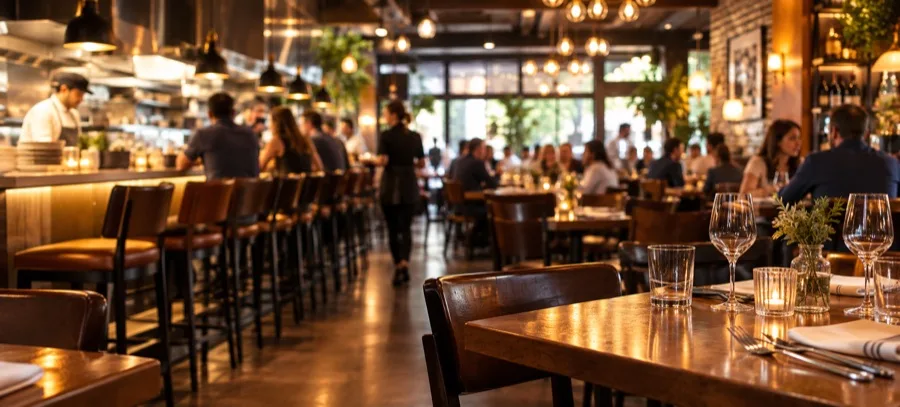
Restaurant dining room representing a hospitality business

Why reviews and reservations need the same system

Diners check reviews before they check the menu, and 79%[14] of restaurant searches are non-branded — "best sushi downtown," "gluten-free near me" — while, in a Toast diner survey, 55% of respondents said they turn to Google when looking for a place to make a reservation[15] and 65% said they go straight to the restaurant's own website to book: if your reviews and availability aren't current the moment that search happens, you've already lost the table. We treat both as one system: automated review requests sent consistently after every visit, consistent responses to every review, and a booking flow built around your actual table turns instead of a generic reservation widget.

First impression most diners form of a restaurant now happens on a review site or map listing, before they ever see your website.

What we set up

Automated review requests sent after every visit, consistent response templates for every rating, escalation rules that route critical feedback to you directly instead of leaving it to post unanswered, and a reservation and waitlist system tuned to your actual table turn times. We also track demand patterns, weather swings, slow Tuesdays, real peak hours, and keep an eye on nearby competitors' sites and reviews so you're never caught off guard.

Included

Reputation management for restaurants

Review requests, response flows across Google and Yelp, and a booking system that matches how your dining room actually turns tables.

Revenue gainedStronger rating drives more first-time reservations
Time savedNo more responding to reviews between services
Risk reducedNothing sensitive posted without a quick human check

What this can look like

It's Friday at 7 p.m. and the host stand is slammed. The phone is answered and callers get the wait and a way to reserve online, without you stopping service. When a table cancels, the next person on the waitlist is texted the moment it opens. The next day, happy guests are asked for a review, and you only have to approve the replies.

An illustration of how it can work, not a client story.

The other half of getting found: your menu

A bad website doesn't just look outdated. It acts as a silent sales tax on every table the restaurant could have filled.

In a 2019 national dining survey, 77%[16] of diners visit a restaurant's website before deciding where to eat, and 68% of those people have been discouraged from visiting because the site was slow, hard to read, or looked out of date. Speed alone can cost you the table: Google research from 2016 found 53%[17] of mobile visits are abandoned if a page takes longer than three seconds to load, and a site that loads in 5 seconds instead of a typical 19 sees 70% longer visits and 35% fewer people leaving immediately.

40%[18] of people already have a specific dish in mind when they search for food — "soup dumplings," "smash burger," "pad see ew" — not a restaurant name. Google now builds dish-specific results directly into Search and Maps. If your menu only exists as a PDF or a photo, none of that text is readable, so your kitchen never shows up for the dish it's actually known for.

Common mistakes we see:

  • Menu only available as a PDF or scanned image, not real text on the page
  • Dish names and descriptions that exist on a printed menu but were never posted online
  • Google Business Profile hours, photos, or menu items that haven't been updated in months

Part of building your site the right way is making sure your actual menu, dish by dish, is something AI crawlers like Google, ChatGPT, and Claude can read and match to a search — not just something a diner has to already be on your site to find.

The payoff shows up in the numbers, not just the traffic. Here are two results from other businesses, not our clients. After optimizing its site for search, Chicago-area chain El Famous Burrito brought in $10,000 of new catering business in two weeks[19], including an order from a customer who found them from out of state. Atlanta's Two Eggs! grew first-party online sales 53% over four months after moving orders off third-party marketplaces and onto a system built around their own site[20], saving over $64,000 a year in commissions in the process (as reported in Chowly's own case study).

Questions we hear

What owners usually ask first

Will responses actually sound like us?

Yes. We build a tone guide from how you already talk to guests, and every response template is written to match it before anything goes live.

What happens with a bad review?

Anything below a set rating routes to a human for review before a response goes out, so a sensitive situation never gets an automatic reply.

Does this connect to our current reservation system?

In most cases, yes. Whether you're on OpenTable, Resy, Toast, or something else, we review what you're using during the operational audit and build around it rather than replacing it outright.

What does it cost?

Cost tracks with your review volume and how much of the booking flow needs rebuilding, from review-response automation alone up to a full reservation overhaul. Reputation management starts at $500; see all starting prices.

Next step

Tell us how reviews and bookings work today.

We'll map what's actually happening before recommending anything. On Castro Street in Mountain View or Murphy Avenue in Sunnyvale? See our page for downtown restaurants there.

Get in touch